
International Support Needed for Rehabilitation and Reconstruction in Nepal Following Climate-Induced Disasters: Foreign Minister Shishir Khanal
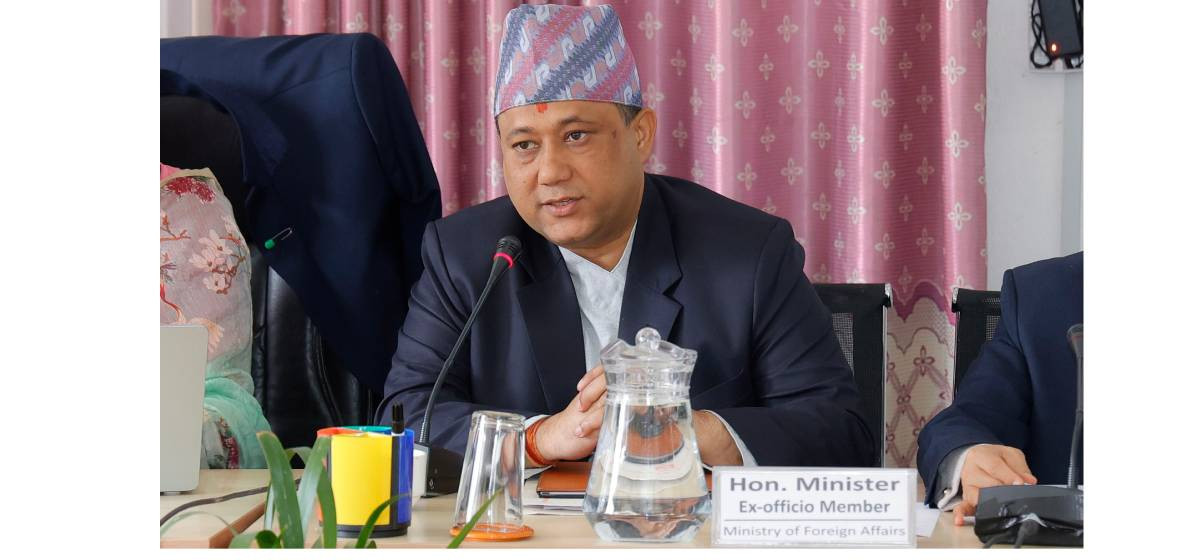
Khem Raj Upadhyay, Kathmandu, 24 September 2026. Foreign Minister Shishir Khanal has stated that long-term international support is essential for rehabilitation and reconstruction in Nepal, which has been affected by climate-induced disasters.
Addressing the G-7 Development Ministers' Meeting—held on the sidelines of the 81st session of the United Nations General Assembly—regarding the situation of recent climate-induced disasters in Nepal, he called for G-7 support and cooperation in areas such as rehabilitation, climate finance, disaster preparedness, multilateral financial assistance, and issues concerning the Himalayan region.
Speaking on behalf of Nepal, Minister Khanal expressed gratitude—on behalf of the Government of Nepal and the Nepali people—to the G-7 member nations and other friendly countries for their solidarity and support during the challenging circumstances caused by climate disasters. "Nepal highly appreciates the leadership role the G-7 has played in advancing international cooperation in the areas of climate change, sustainable development, resilience, and disaster risk reduction," he said. He also thanked France, the G-7 chair, for organizing the meeting.
Noting the immense human and physical damage caused by recent climate-induced disasters in Nepal, Minister Khanal explained that floods had damaged homes, roads, bridges, schools, health facilities, and hydropower infrastructure, while also disrupting daily life and essential services.
He informed the meeting that, according to preliminary assessments, more than 5 billion US dollars would be required for rehabilitation and reconstruction efforts. Noting that scientific study of the disaster is ongoing, he stated that preliminary findings attribute the event to complex interactions among ice, rock, water, and unstable terrain within a rapidly warming Himalayan environment. He informed that the government has formed an expert committee to investigate the causes, including climate change, as well as geological, glacial, and hydrological factors.
He highlighted that mountains, rivers, communities, and critical infrastructure face escalating risks from floods, landslides, glacial hazards, and other climate-induced disasters. Minister Khanal emphasized the need for further support from the international community, noting that while Nepal’s contribution to global greenhouse gas emissions is negligible, the country is disproportionately bearing the impacts of climate change. "Nepal contributes very little to global emissions; yet, we are disproportionately suffering the effects of climate change, ranging from devastating floods and landslides to melting glaciers," he said.
Emphasizing the need to prioritize the Himalayan region in the climate agenda, Minister Khanal stated that the future of glaciers, mountains, and water systems is inextricably linked to regional and global climate security. "Changes in the Himalayas do not remain confined to the region," he said. "They impact monsoon systems, river basins, agricultural systems, and the lives of millions of people across South Asia and beyond."
He expressed Nepal's readiness to collaborate with the G7 to conserve Himalayan ecosystems and enhance shared climate resilience.
He stressed the need to transform international solidarity into concrete action, risk into resilience, and shared responsibility into climate justice. "Nepal is ready to collaborate with all international partners, including the G7, to build a safe, resilient, and sustainable world," said Minister Khanal.






तपाईको प्रतिक्रिया